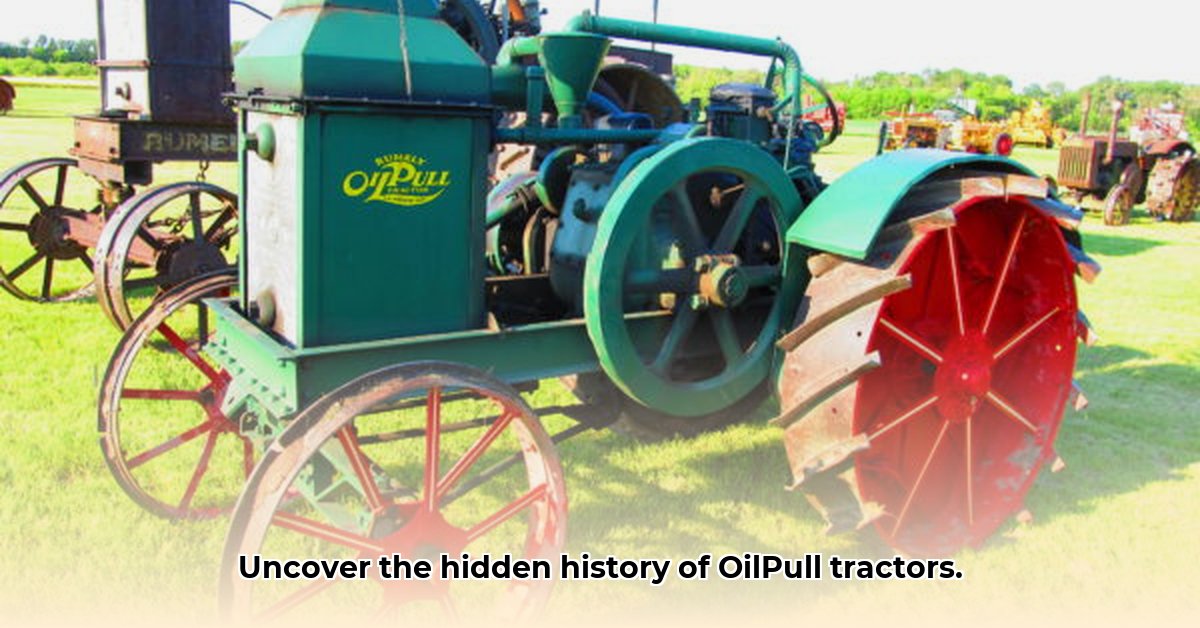
The Rumely OilPull: A Kerosene-Fueled Revolution in Agriculture
Imagine the early 1900s: farming was arduous, reliant on animal power, and severely limited in efficiency. Then came the Rumely OilPull, a kerosene-powered behemoth that irrevocably changed the landscape of American agriculture. This isn't just a story about machinery; it's a tale of human ingenuity, adaptation, and the transformative power of technology. This guide delves into the OilPull's fascinating history, exploring its innovative design, impact on farming practices, operational aspects, and enduring legacy. For more in-depth information, visit the OilPull Tractor website.
The OilPull's Innovative Design: A Kerosene Colossus
The OilPull's most striking feature was its kerosene engine. In an era when gasoline was scarce and expensive, kerosene offered a practical, readily available alternative fuel source. This wasn't merely a cost-cutting measure; it was a strategic decision that unlocked the potential for widespread adoption. The tractor's robust construction and impressive pulling power were equally vital to its success. This wasn't a delicate machine; it was a workhorse built to endure the rigors of daily farm life.
Starting the OilPull, however, wasn't a simple affair. The complex starting mechanism often required multiple individuals, highlighting the sheer power of the engine and the ingenuity farmers employed to overcome this challenge. The design involved trade-offs. While powerful, the engine was also complex, demanding skilled maintenance. Its considerable weight, while beneficial for stability, presented operational challenges. Different models had slightly varying specifications, but their immense power and pulling capabilities remained consistent. A common model, the Type F, provides a glimpse into their scale:
| Specification | Value | Notes |
|---|---|---|
| Engine Type | Kerosene | Reliable and readily available fuel source. |
| Bore | 10 inches | Significant engine size, contributing to power. |
| Stroke | 12 inches | Contributes to the engine's overall power output. |
| Power (approx.) | 20-40 horsepower (depending on model) | Power varied across models. |
| Weight (approx.) | 10,000-15,000 lbs (depending on model) | A very heavy machine. |
These significant dimensions underscore the OilPull’s considerable power and size within the context of early 20th-century technology.
The OilPull in its Historical Context: Reshaping American Farming
The early 20th century saw farming as backbreaking work, heavily reliant on human and animal labor. Efficiency was limited by the strength and stamina of horses and oxen. The Rumely Company recognized this crucial need for change, and the OilPull represented a solution. It allowed farmers to cultivate larger areas of land, plant more crops, and increase overall productivity. While the initial market reception was positive, the high initial cost and complex maintenance requirements hindered widespread adoption in some areas. The Rumely Company's role in its success cannot be overstated; their innovation shaped a pivotal moment in agricultural history.
Operating the OilPull: A Farmer's Perspective
Operating an OilPull demanded skill. Starting the engine was a collaborative effort, often involving several people coordinating their actions. Regular maintenance was crucial for its continued operation, requiring both technical knowledge and dedication. Farmers developed an intimate understanding of their machines, learning to diagnose issues and perform repairs. The OilPull's versatility extended to various tasks, from plowing to hauling heavy loads, significantly enhancing farming efficiency and offering a path to increased prosperity for many farmers.
The Enduring Legacy of the OilPull: A Collector's Item and Historical Artifact
Although superseded by more efficient gasoline tractors, the OilPull’s legacy endures. It stands as a testament to early 20th-century engineering innovation and the farmers who embraced this revolutionary technology. Today, original OilPull tractors are highly prized by collectors and enthusiasts, often painstakingly restored to their former glory. These collectors and restorers are instrumental in preserving the OilPull's story, ensuring its place in agricultural history remains secure. Their passion keeps the spirit of this incredible machine alive for future generations.
Key Takeaways:
- The Rumely OilPull revolutionized early 20th-century farming with its powerful kerosene engine.
- Its innovative design, while powerful, presented complexities in starting and maintenance.
- The OilPull's impact on agricultural productivity and efficiency was profound, despite challenges in its initial adoption.
In conclusion, the Rumely OilPull's story is more than just an examination of machinery; it's a compelling narrative of human ingenuity overcoming challenges, and the lasting impact of technological advancement on the world of agriculture. It serves as a powerful reminder of the transformative effects of innovation and the enduring legacy of a machine that forever changed the way we farm.